
Back
Inside IMA Accelerator
•
4 min read
Building Toward Medina
For many entrepreneurs, growth is measured in product milestones, funding rounds or team expansion.
Less often discussed is how geography itself can become part of a company’s mission.
Within the IMA Accelerator community, discussions are underway to establish a future headquarters in Medina, one of the most historically and spiritually significant cities in Islam. The decision reflects more than operational expansion. It signals how the organization’s development has remained closely tied to the lived realities of the people it serves.
The origins of IMA can be traced back to a personal problem. Like many early-stage founders, Abu Lahya began by trying to solve his own circumstance. Financial instability, uncertainty around career direction and the desire to build a future aligned with personal values created a set of constraints familiar to many young professionals navigating an increasingly complex economy.
The initial objective was practical: develop skills that could generate income in a way that remained ethically consistent with religious beliefs.
But solving one’s own constraints often reveals how widely those constraints are shared.
What began as an individual effort gradually evolved into a structured program designed to help others facing similar challenges. Over time, the initiative expanded into a distributed global team and a growing student community seeking financial stability through halal income pathways.
To date, more than 1,500 students have participated in IMA Accelerator programs, supported by a team of more than 50 individuals working across multiple time zones. Many members of the team operate remotely, contributing to curriculum development, coaching, student support and operational infrastructure.
The next stated goal is to help 10,000 Muslims build sustainable income streams that allow for greater long-term stability.
Within this context, the proposed establishment of headquarters in Medina reflects a continuation of the same underlying philosophy.
For many Muslims, Medina represents not only historical significance, but also a symbolic connection to community, ethical conduct and intentional living. Locating part of the organization’s infrastructure there reflects the idea that professional growth and spiritual grounding need not exist separately.
As the team expands, shared physical space may also contribute to greater cohesion across functions that are currently distributed globally.
The move is not framed primarily as a logistical decision. It is framed as an alignment decision.
If the stated mission involves helping Muslims create conditions that allow for greater stability, including the possibility of relocation to environments more closely aligned with personal values, then building organizational presence in Medina becomes a continuation of that same objective.
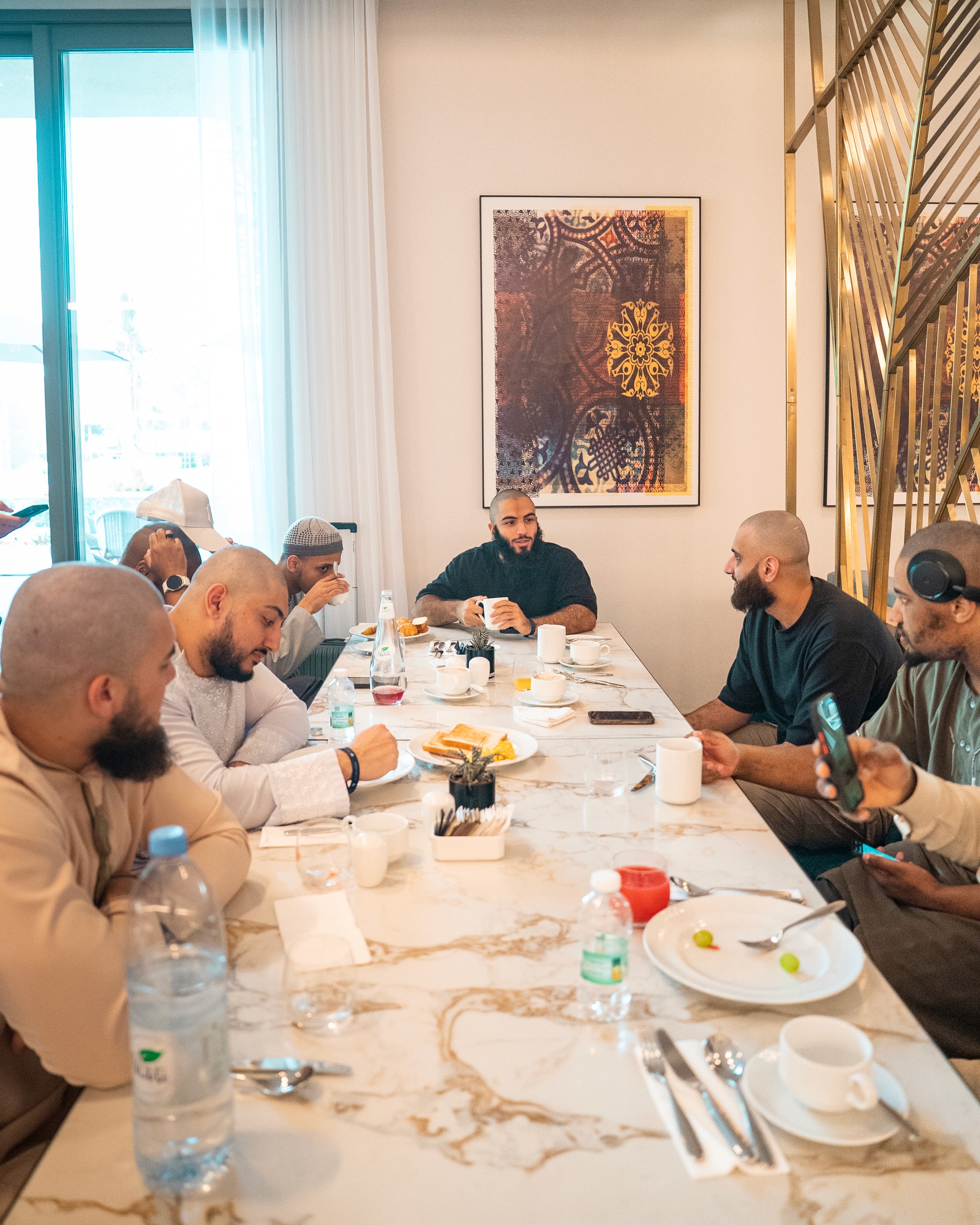
The initiative also reflects an internal dynamic within the team itself. Many of the individuals supporting students through the program are navigating similar life decisions. The same economic considerations influencing students often apply to the people helping guide them.
In this sense, the organization is not positioned as separate from its audience. The challenges being addressed are shared.
The expectation that the team may grow to approximately 100 members within the coming year introduces new operational considerations, including how collaboration, mentorship and knowledge-sharing are structured across an expanding organization.
Bringing team members together in a city widely regarded as one of the most significant in the Muslim world carries symbolic meaning, but also practical implications for how institutional culture develops.
Entrepreneurial ecosystems often emphasize scalability, efficiency and competitive advantage. Less frequently examined is how founders integrate questions of place, belonging and identity into organizational development.
The proposed Medina headquarters represents an example of how values-based considerations can influence business decisions that extend beyond immediate commercial priorities.
In this model, professional infrastructure becomes part of a broader attempt to create alignment between economic activity and long-term life direction.
The effort to build structures that support both financial independence and personal intention reflects an approach to entrepreneurship that considers success as more than a purely financial outcome.
For organizations operating at the intersection of global digital work and values-based decision-making, questions of location may increasingly reflect cultural and philosophical considerations alongside traditional business metrics.
As IMA continues to expand its team and student base, the proposed presence in Medina reflects a belief that where work takes place can influence why that work matters.