
Back
Inside IMA Accelerator
•
4 min read
How One Young Muslim Turned a Difficult Work Routine Into a Blueprint for Halal Entrepreneurship
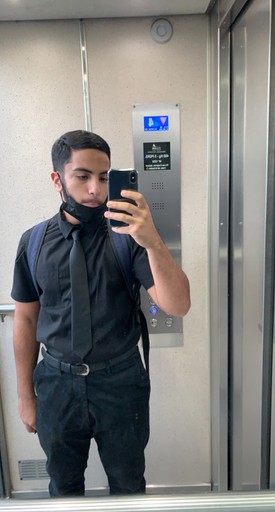
Before Abu Lahya was teaching Muslims how to build halal online businesses, he was navigating a work-study routine that many young people recognize: long hours, limited mobility and the sense that every month was spoken for before it began.
Monday through Friday, he attended university from 8 a.m. to 6 p.m. Weekends meant restaurant shifts from 11 a.m. to 11 p.m. The pay - about 800 euros a month - was steady, but it didn’t offer much room to grow or plan ahead.
He later described the situation in plain terms: with a job, you are always dependent on the one who pays you. That realization, more than the workload itself, pushed him to rethink how he was building his life.
“I felt so weak… I was depending on him paying me,” he said. “From that moment my only focus was to make the same amount online for myself, not relying on someone.”
His story now sits inside a larger trend. According to recent global analyses of the halal economy and the creator economy, Muslim participation in digital entrepreneurship has accelerated sharply since 2025 as young professionals look for income streams that offer flexibility, ethical clarity and long-term stability. Many feel underserved by traditional career paths and skeptical of online business models that promise speed but overlook Islamic principles.
A Back Story Grounded in Responsibility, Not Escape
Abu Lahya's early work life was shaped by a clear responsibility to support himself through school. He wasn’t looking for shortcuts or lifestyle aesthetics; he was looking for a sustainable foothold.
Online business entered the picture as a practical question more than a dream: How do I earn my own income, on my own terms, without compromising my values?
For many young Muslims today, that same question is becoming urgent. Social platforms may amplify success stories, but the day-to-day reality is that countless new graduates and workers are juggling multiple responsibilities while trying to build something that aligns with both professional ambitions and faith.
That alignment became nonnegotiable for him. If he was going to build something online, it had to be halal from the foundation up.
The path Abu Lahya chose offered something jobs couldn’t control over time, pricing and client relationships.
But none of it happened overnight. He had to understand how outreach works, how brands review offers, how to structure clear terms, and how to build deals that stayed within Islamic standards of transparency and fairness. He had launched other ventures before—none succeeded, but each failure pushed him closer to IMA.
There were missteps and false starts along the way. The failures didn’t appear in dramatic fashion- they accumulated in messages that were ignored, calls that didn’t convert, and early deals that showed him what he didn’t yet understand. But they eventually formed a pattern he could refine.
Over time, that pattern became a system. And that system became an agency.
Financial Independence and the Turning Point Toward Hijrah
Once his income stabilized and surpassed what he earned in hospitality, something shifted. The question was no longer whether he could cover next month’s expenses, but whether he could build a life structured around faith and autonomy.
He turned toward a goal shared by many Muslims but pursued by far fewer: hijrah, moving to a Muslim-majority country.
For some, hijrah is a distant idea. For others, it becomes real only after they achieve a level of independence that makes relocation viable financially and emotionally.
Online work made that possible for him. Deals could be run from anywhere. Clients didn’t need him tied to a physical shop or to rigid hours.
Today, Abu Lahya splits his time between Algeria and Dubai. He had lived in France for several years before moving himself and his family back to his home country, a return that shaped his broader mission. He now describes that mission as “connecting Muslims to make the ummah stronger,” a natural expansion of what began as a pursuit of personal independence.
Failures That Became Frameworks
When Abu Lahya began teaching others through the IMA Accelerator, he didn’t present his journey as a streak of wins. He pulled directly from the missteps that shaped him.
Students often cite the same learning curve he experienced: slow outreach at first, fear of negotiation, the discipline required to send messages daily and the pressure of doing client calls without shortcuts or scripts to hide behind.
Trustpilot reviews from 2025 and 2026 describe a recurring theme: the program’s value comes from structure and accountability rather than promises of speed. Students mention clear systems, honest feedback and a framework that prevents them from drifting into non-halal practices that sometimes appear in the online income space.
Many also note the community aspect, which is a sense of brotherhood that helps them stay consistent when the early stages feel uncertain.
A Larger Goal: Helping Muslims Build What He Once Needed
Once Abu Lahya completed hijrah, he could have stopped there. Instead, the next phase of his work shifted toward something broader: creating a path for others who want the same stability he once looked for.
Behind that shift lies a simple but often overlooked truth: It is difficult to support your community if you have not yet secured your own footing.
Not in a selfish sense, but in the practical sense of being able to give back meaningfully.
Students who share their experiences publicly often echo that idea. Many describe increased confidence, a stronger sense of agency and an ability to contribute to their families and communities.
Helping Yourself First, So You Can Help Others
For Abu Lahya, the progression has been steady and intentional:
Learn a skill that is halal and practical.
Use that skill to gain independence and freedom of movement.
Build a system others can adopt without compromising their principles.
Reinforce the idea that supporting the ummah starts by strengthening yourself.
In an era when young Muslims are navigating economic uncertainty, rising living costs and a digital economy that rewards speed, his story offers a quieter but more durable message: sustainable growth comes from skills, structure and alignment — not shortcuts.
And as more Muslims look for viable paths into entrepreneurship, stories like his offer a reminder that personal stability and community uplift are not competing goals. They are sequential ones.